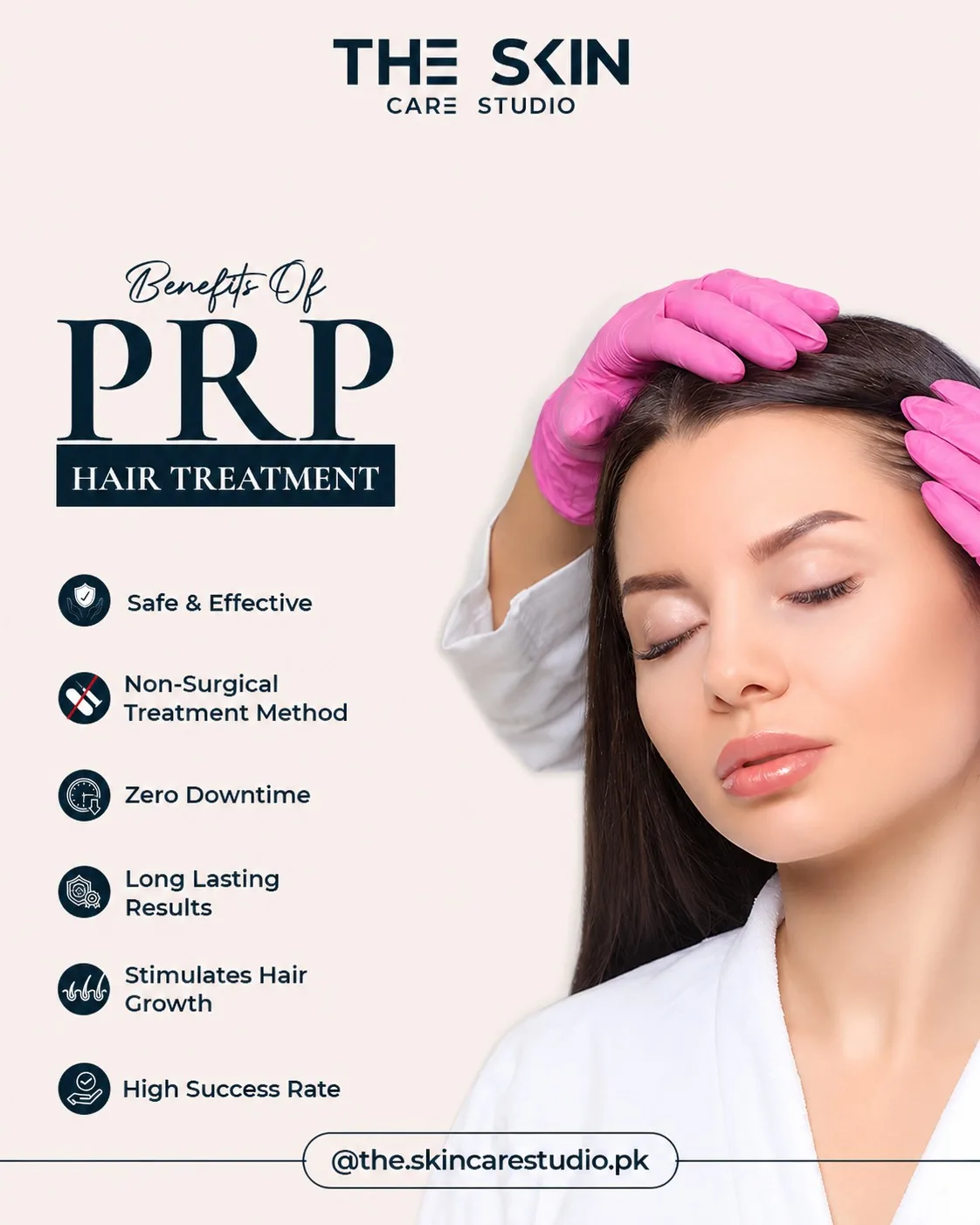
Is PRP Hair Treatment Suitable for Hair Thinning?
Hair thinning is a common concern among men and women. It can develop gradually, making the scalp more visible, reducing hair volume, and affecting confidence. Genetics, hormonal changes, stress, nutritional deficiencies, certain medical conditions, and aging can all contribute to changes in hair density.
If you have noticed that your hair is becoming thinner, you may have come across Platelet-Rich Plasma (PRP) hair treatment. This non-surgical procedure uses a concentrated portion of your own blood, which is prepared and injected into selected areas of the scalp. PRP is being studied and used as an option for certain types of hair loss, particularly pattern hair loss.
But is PRP suitable for everyone experiencing thinning hair? The answer depends on the cause of your hair loss, your scalp condition, and the condition of your hair follicles.
At The Skin Care Studio in Lahore, understanding available hair and scalp treatment options can help you make an informed decision. This guide explains how PRP works, its potential benefits, limitations, risks, and what to consider before booking a consultation.
What Is PRP Hair Treatment?
PRP stands for Platelet-Rich Plasma. It is prepared from a small sample of your own blood and contains a concentrated amount of platelets suspended in plasma.
Platelets contain proteins and growth factors involved in the body's normal healing processes. Researchers are investigating how these components may influence the environment around hair follicles and support hair growth in selected patients.
During PRP hair treatment, a healthcare professional collects a blood sample and processes it using a specialized centrifuge. This separates components of the blood and allows the practitioner to prepare the platelet-rich portion according to the treatment protocol.
The prepared PRP is then injected into selected areas of the scalp.
Unlike a hair transplant, PRP does not involve moving hair follicles from one part of the scalp to another. It is also different from topical hair products because it involves injections.
Clinical research suggests that PRP may improve hair density in some people with androgenetic alopecia, commonly called male or female pattern hair loss. However, results vary, and the evidence has limitations. PRP should not be presented as a guaranteed cure for baldness.
Is PRP Hair Treatment Suitable for Hair Thinning?
PRP may be suitable for some people experiencing hair thinning, particularly when the thinning is associated with androgenetic alopecia and functioning hair follicles remain in the affected areas.
However, not every type of hair loss responds in the same way. Identifying the cause of thinning is an important first step.
1. Early-Stage Pattern Hair Loss
People who notice gradual thinning around the crown, temples, or central parting may have pattern hair loss. In these cases, PRP may be considered as part of an individualized treatment plan.
Some studies have reported improvements in hair density following PRP injections. Nevertheless, the amount of improvement differs between patients, and the evidence does not establish a predictable result for everyone.
2. Reduced Hair Density
If your hair appears less dense than before but the scalp still contains hair follicles, a practitioner may assess whether PRP is appropriate.
Treatment may be considered when the goal is to improve the appearance of hair density rather than restore a completely bald area.
3. Hair Thinning in Men
Men may experience gradual recession at the temples, thinning at the crown, or changes in the overall density of the scalp.
PRP may be discussed as one option for selected men with pattern hair loss. A qualified professional can also explain established treatments, including topical minoxidil and, where appropriate, prescription medication.
4. Hair Thinning in Women
Women can experience a widening parting, reduced hair volume, or diffuse thinning across the scalp.
PRP may be an option for some women, but the underlying cause should be assessed first. Iron deficiency, thyroid disorders, hormonal changes, and other medical factors may contribute to hair loss and require different management.
5. Thinning That Has Not Responded to Other Treatments
Some people explore PRP when they have not achieved their desired results with other approaches.
Before adding PRP, it is important to review the diagnosis, previous treatments, adherence, and possible underlying medical causes. A dermatologist can help determine whether combining treatments is appropriate.
How Does PRP Help With Hair Thinning?
PRP is intended to deliver a concentrated preparation of platelets and associated growth factors to selected scalp areas. These components may influence cellular signaling and processes involved in tissue repair and the hair growth cycle.
Researchers have investigated whether these effects can support hair follicle activity and improve hair density.
However, the exact mechanisms are not fully established, and PRP preparations differ between clinics and studies. Differences in platelet concentration, processing methods, injection techniques, and treatment schedules may affect outcomes.
A systematic review and meta-analysis published in Platelets found evidence suggesting that PRP may increase hair density in people with androgenetic alopecia, but the overall quality of the evidence was limited by differences between studies and other methodological concerns.
You can read the published research here: https://pmc.ncbi.nlm.nih.gov/articles/PMC9918380/
This means PRP is a potential treatment option, not a guaranteed solution for every cause of hair thinning.
Potential Benefits of PRP Hair Treatment
The potential benefits of PRP depend on the patient's diagnosis and response to treatment.
May Improve Hair Density
Some clinical studies have reported increased hair density following PRP treatment compared with control treatments. This may be relevant to people with certain types of pattern hair loss.
However, not everyone experiences measurable improvement, and the extent of any change cannot be predicted with certainty.
May Help Reduce Hair Shedding
Some patients report reduced shedding during the months following treatment. This outcome is not guaranteed, and ongoing hair loss may indicate an underlying cause that needs further assessment.
Uses Your Own Blood
PRP is prepared from the patient's own blood. This avoids introducing donor-derived plasma, although it does not eliminate the risks associated with injections, contamination, or other procedural complications.
Minimally Invasive Procedure
PRP involves injections rather than surgical removal or transplantation of hair follicles. Many people can resume normal daily activities soon after treatment, depending on their response and the practitioner's aftercare instructions.
Can Be Considered Alongside Other Treatments
For selected patients, PRP may be incorporated into a broader hair-loss management plan. A healthcare professional can advise whether it is appropriate alongside established treatments.
PRP should not automatically replace medical treatments that are recommended for a specific diagnosis.
Who May Not Be a Suitable Candidate for PRP?
PRP is not appropriate for everyone. A professional assessment is particularly important if you have any of the following concerns:
Advanced baldness: Areas with extensive, long-standing hair loss may have limited potential for meaningful improvement from PRP alone.
Sudden or unexplained hair loss: Rapid shedding or patchy hair loss may be associated with medical conditions that require diagnosis before cosmetic treatment.
Active scalp disease: Certain inflammatory or infectious scalp conditions may need treatment before injections are considered.
Blood or platelet disorders: Conditions affecting platelet function or blood clotting may influence suitability.
Certain medical conditions or medications: Some illnesses and medications may affect bleeding risk, platelet function, or the safety of the procedure.
Your healthcare professional should review your medical history, current medication, scalp condition, and treatment goals before recommending PRP.
What Happens During a PRP Hair Treatment Session?
Understanding the procedure can help you prepare for a consultation.
Step 1: Scalp Assessment
The practitioner reviews your hair-loss history, examines the scalp, and discusses possible causes. Additional examination or blood tests may be recommended when an underlying medical condition is suspected.
Step 2: Blood Collection
A small amount of blood is drawn from your arm using standard clinical procedures.
Step 3: PRP Preparation
The blood sample is processed in a centrifuge to separate its components. The platelet-rich portion is prepared for use according to the clinic's protocol and equipment instructions.
Step 4: Scalp Injections
The prepared PRP is injected into selected scalp areas. The number and location of injections depend on the treatment plan.
You may feel brief discomfort or tenderness during the procedure. Ask your practitioner what measures are available to improve comfort.
Step 5: Aftercare Instructions
The practitioner provides instructions on scalp care, washing, exercise, and the use of hair products after treatment. Follow the individualized guidance rather than relying on a universal recovery schedule.
PRP Hair Treatment: Results and Recovery
PRP does not produce instant hair growth. If treatment is effective, changes generally develop over time as the hair growth cycle progresses.
Some people may notice reduced shedding during the first few months. Changes in hair density may take several months to assess, and photographs or scalp measurements can help track progress.
Many treatment plans involve an initial series of sessions, often spaced several weeks apart, followed by reassessment. The exact schedule should be based on the practitioner's recommendation and your response.
Possible short-term side effects include:
Tenderness or pain at injection sites.
Temporary redness or swelling.
Minor bleeding or bruising.
Headache or scalp sensitivity.
Infection and other complications are possible, although serious adverse events have not been commonly reported in the clinical studies reviewed. Seek medical advice if you develop worsening pain, increasing redness, fever, discharge, or other unexpected symptoms.
Results may not last indefinitely. Some patients may be advised to consider maintenance sessions, but the need and timing vary. Do not assume that repeated treatment is necessary without reviewing your progress and options with a qualified professional.
PRP Hair Treatment vs Other Hair-Loss Options
Choosing the right approach depends on the cause of your thinning hair.
PRP treatment: May improve hair density in some patients with pattern hair loss. It requires injections and may involve several sessions.
Topical minoxidil: An established treatment for certain types of hair loss. It requires consistent use, and results vary.
Prescription medication: Depending on the diagnosis and individual circumstances, a doctor may discuss prescription options and their potential risks.
Hair transplant: A surgical procedure that relocates hair follicles to selected areas. It may be considered for suitable candidates with more established hair loss.
Treatment of underlying causes: Hair loss related to nutritional deficiencies, thyroid problems, medication, or other medical conditions may require management of the underlying issue.
A dermatologist can help you compare the benefits, limitations, costs, and potential side effects of these options.
How to Choose a PRP Hair Treatment Clinic in Lahore
If you are considering PRP hair treatment in Lahore, focus on clinical standards and individualized assessment rather than promotional claims alone.
Before booking, ask the clinic:
Who will assess your hair loss and perform the injections?
What qualifications and experience does the practitioner have?
How is the PRP prepared, and what infection-control procedures are followed?
What results are realistic for your specific type of hair thinning?
What is the total cost of the recommended treatment plan?
How will progress be monitored, and what alternatives are available?
The Skin Care Studio in Lahore provides a starting point for exploring aesthetic and skin-related services. If you are considering PRP for hair thinning, contact the clinic to confirm current service availability and arrange an assessment with an appropriately qualified practitioner.
Visit the official website: https://theskincarestudio.pk/
Frequently Asked Questions
1. Is PRP suitable for mild hair thinning?
PRP may be considered for selected patients with early pattern hair loss, particularly when functioning hair follicles remain. A professional assessment is needed to determine whether it is appropriate.
2. How many PRP sessions are needed for hair thinning?
The number of sessions depends on the patient's condition, treatment protocol, and response. An initial course may involve several sessions followed by reassessment.
3. How long does PRP take to show results?
If PRP works, changes may become noticeable over several months. Hair growth is gradual, and results vary between individuals.
4. Can PRP regrow hair in completely bald areas?
PRP is not a reliable way to restore hair in completely bald areas where functioning follicles are absent or severely diminished. A specialist can discuss other options.
5. Is PRP hair treatment safe?
PRP is generally considered a procedure with manageable short-term side effects when performed appropriately, but it is not risk-free. Infection, pain, bruising, and other complications can occur.
6. Can women receive PRP for hair thinning?
Yes, some women may be candidates, particularly those with certain types of pattern hair loss. Other causes of thinning should be assessed before treatment.
7. Does PRP permanently stop hair loss?
No. PRP cannot guarantee permanent prevention of hair loss. The underlying condition may continue to progress, and further management may be needed.
8. Is PRP better than a hair transplant?
These procedures serve different purposes. PRP may help selected patients with thinning hair, whereas a hair transplant moves follicles to areas requiring coverage. A specialist can advise which approach is appropriate.
Final Thoughts
PRP hair treatment may be suitable for some people experiencing hair thinning, particularly those with early pattern hair loss and remaining functional hair follicles. Research suggests potential improvements in hair density, but the quality of evidence is limited and outcomes are not guaranteed.
The most important step is identifying the cause of your hair thinning before choosing a treatment. A qualified healthcare professional can assess your scalp, explain realistic expectations, and help you compare PRP with other available options.
If you are exploring hair restoration options in Lahore, contact The Skin Care Studio to ask about available services and consultation arrangements. Make your decision after discussing suitability, risks, costs, and follow-up care.
Medical disclaimer: This article is for educational purposes only and does not replace professional medical advice, diagnosis, or treatment.